To the average person, listening to agents or brokers discussing deals can sound like a foreign language. How important is it to understand their terminology? If you’re in the market to purchase real estate, it is imperative to be comfortable with the common vocabulary of the industry.
It’s never a good idea to sign a contract without fully understanding all its content. In fact, not being familiar with even one or two critical terms can have lasting consequences after closing, perhaps not in your favor. On the other hand, familiarizing yourself with common real estate terms ahead of time can help you get the best deal possible.
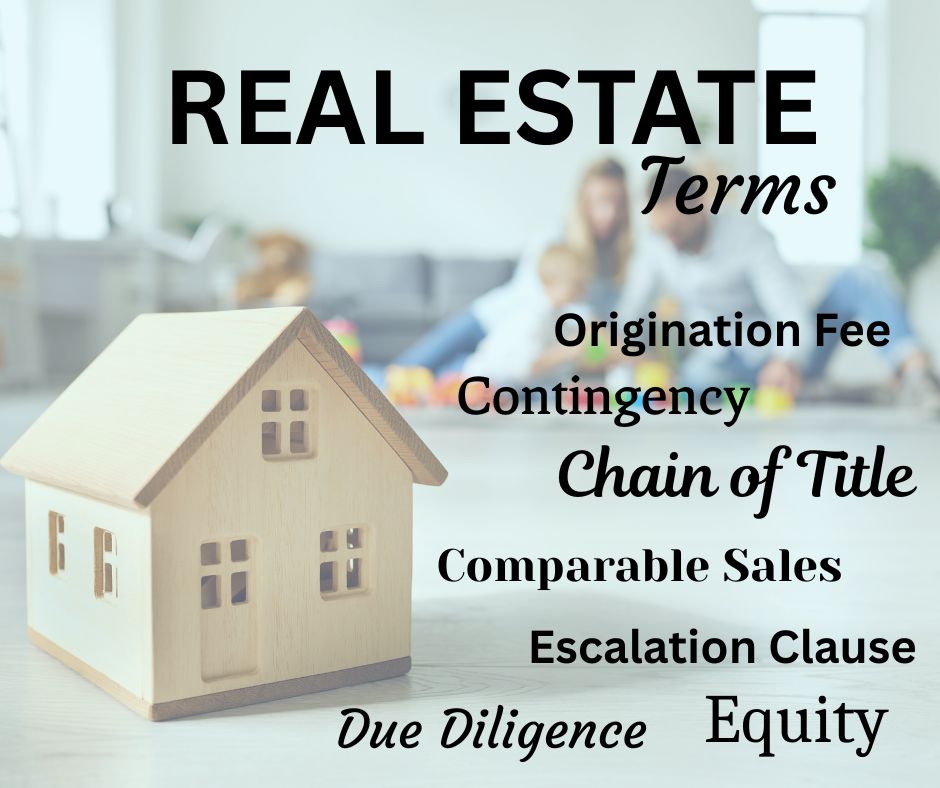
Do you understand these real estate terms?
How many real estate words and phrases shown in the following list do you understand?
- Chain of title
- Contingency
- Comparable sales
- Due diligence
- Equity
- Escalation clause
- Origination fee
- Right of first refusal
These words and many other common phrases of the industry may have a significant impact on your next home purchase or real estate investments.
A brief overview
Here is the list again, this time with a basic definition of each term included:
Chain of title: Document showing a property’s history of ownership
Contingency: An agreed upon condition that must be met for the contract to be valid
Comparable sales: List of recent sales in the same area for similar houses as the one for sale
Due diligence: Thorough investigation buyer should conduct before buying a house
Equity: Balance owed on mortgage minus current market value of the property
Escalation clause: Agreement between seller and prospective buyer allowing buyer to raise offer if a higher offer from another party is brought to the table
Origination fee: Processing fee charged by mortgage lender, often worked into the overall loan
Right of first refusal: Prospective buyer is afforded a right to match an outside offer before seller can accept that offer
Understanding these (and other) industry phrases enables you, as a buyer, to make informed and confident decisions. Such understanding helps you protect your interests, especially if there are multiple offers on the table, or a particular contract is complex. It prevents confusion and helps you know what types of questions to ask while touring homes for sale. Being familiar with applicable terminology is an asset that empowers you during negotiations.